
Frequently Asked Questions
FAQ
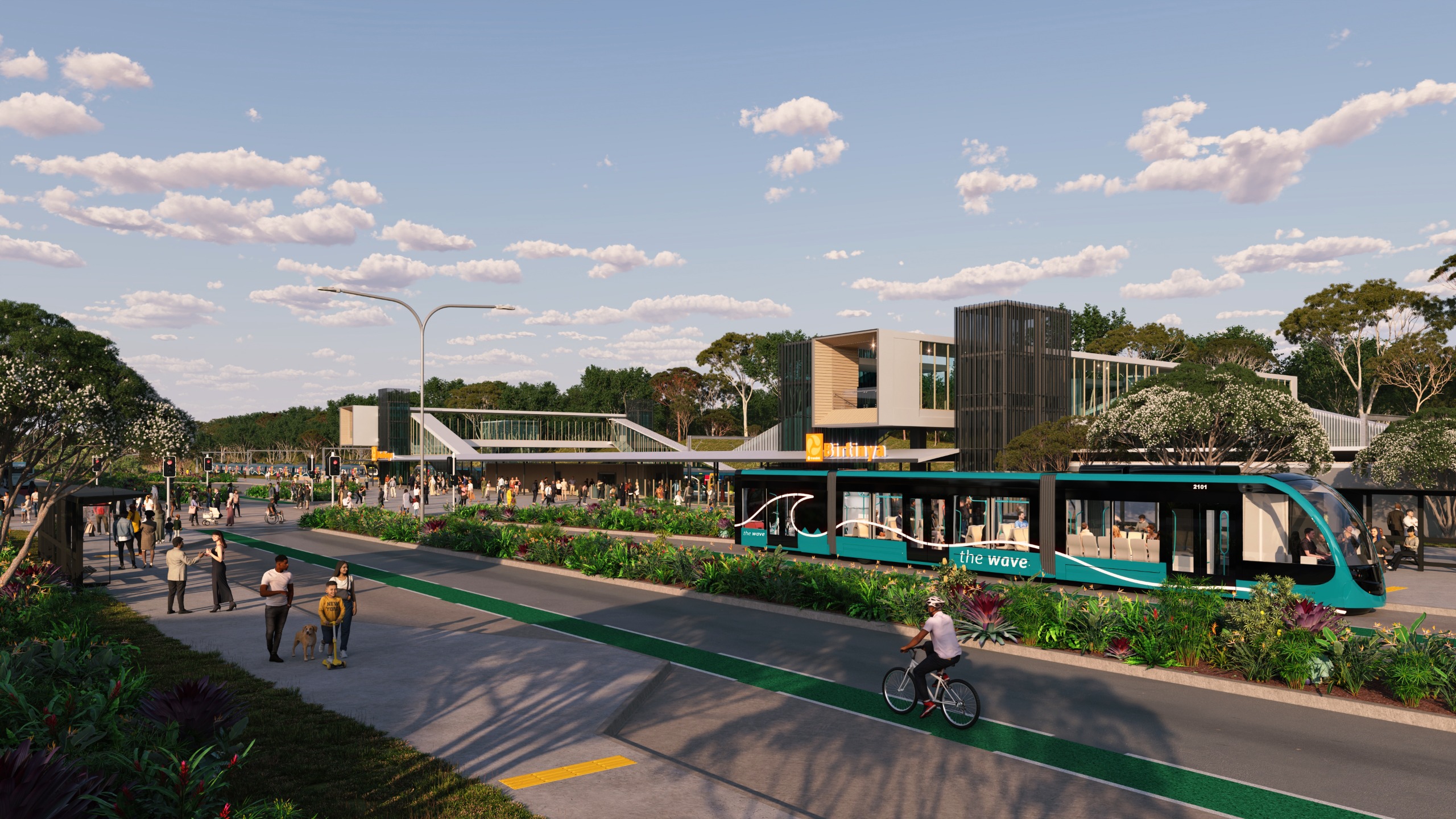
A metro-style service will provide modern, frequent, travel that will cater for the region’s growing demand for public transport and will help to improve the efficiency of the broader transport network and ease congestion.
We’re exploring vehicles to find the best option for this service and closely monitoring the market for innovative and emerging technologies to make sure the Sunshine Coast is equipped with the best solution for the future.
The MRI Upgrade is critical to The Wave, improving connectivity, integrating the metro-style service and enabling future transport options.
The Wave Stage 3 (Metro) and the MRI Upgrade will be delivered as part of a combined civil infrastructure scope of works under the Civil Infrastructure Program (CIP). The CIP will encompass the delivery of structural and earthworks including all civil works and stations.
To achieve this, two Program Alliances will be established to manage and deliver the CIP. A Program Alliance model involves a collaborative contracting approach that unites delivery partners, including designers and construction contractors, to work as a single team.
This approach supports early contractor involvement, encourages innovation, and enables risks to be managed collectively to achieve the best overall project outcomes.
Once the Program Alliance delivery partners are on board, they will work collaboratively to progress the design for the remaining public transport corridor between Mountain Creek and the Sunshine Coast Airport. Confirmation of the remaining section of corridor is expected following contract award of the Program Alliance delivery partners.
Planning and technical assessments have been completed to confirm the corridor alignment between the Sunshine Coast University Hospital and Mountain Creek. However, we are continuing to investigate the next stage of the corridor which will extend from Mountain Creek to the Sunshine Coast Airport.
TMR will provide updates as they become available and work closely with any affected property owners to provide clear information and support. The department is committed to minimising property impacts wherever possible.
Planning and design for noise barriers is ongoing. In addition to permanent noise barriers, we are also considering other noise mitigation measures, such as road surface treatments. We acknowledge the importance of this matter to the community and are working to ensure the best possible outcomes.
During construction, we will implement measures where possible to minimise disruption, including scheduling activities during daytime hours and using quieter machinery wherever possible. While every effort will be made to minimise disruptions, construction is acknowledged as a temporary but necessary process.
We are committed to keeping residents informed and will provide updates as more information becomes available.
TMR is committed to delivering a metro-style service that is inclusive and accessible to everyone. To achieve this, the project team is working closely with disability specialists to ensure that best-practice accessibility standards are integrated in both the service design and station precincts. This includes considering the needs of people with disabilities, parents with prams, seniors, and all other community members to create station precincts and a transport service that are safe, convenient, and accessible for all.
Early works for Stage 1 of the MRI Upgrade started in October 2025. These activities, including site clearing, service relocations, and geotechnical testing, are essential to prepare the area for major construction.
The contract for a second early works package, focusing on major earthworks and embankment construction, has been awarded with work anticipated to start in August 2026.
The Wave Stage 3 (Metro) and the MRI Upgrade will be delivered as part of a single, integrated program of works known as the Civil Infrastructure Program (CIP). This program will be delivered under a Program Alliance model, which fosters collaboration between key stakeholders to ensure efficient delivery. The CIP will encompass the delivery of structural and earthworks including all civil works and stations.
Two Program Alliances will be established by late 2026, with major construction scheduled to begin in 2027. Further updates will be provided as the project progresses.
Procurement for the Fleet, Operations and Maintenance (FOM) package is expected to be released to market later 2026. The FOM will focus on the public transport assets and services for The Wave Stage 3 (Metro). The FOM Package will include the design and construction of a new depot, delivery of the new metro-style fleet, as well as establish an operations team to deliver the service and maintain the vehicles.
This package will ensure the system is fully integrated, with vehicles, infrastructure and operations working together to provide a seamless, high-frequency public transport service.
This will ensure this public transport system is supported by a robust operational framework, delivering reliable, safe and efficient services for the Sunshine Coast community.
Active transport provisions across the projects are still being finalised as planning and design work continues. We understand the importance of active transport options, such as walking and cycling paths, to the Sunshine Coast community and are committed to delivering infrastructure that meets the needs of all users and supports sustainable and active travel.
As part of Stage 1 of the MRI Upgrade project, which is already underway, new active transport connections will be delivered for pedestrians and bike riders linking Karawatha Drive in Mountain Creek to Brisbane Road in Mooloolaba.
During construction temporary or permanent road and pathway closures may be necessary. Disruptions will be minimised where possible by carefully assessing impacts, providing safe and practical alternative routes, and keeping the community informed throughout the process.