

Overview
Environmental investigations are helping inform the design, approvals and construction planning for the Bribie Island Bridge Upgrade.
The project area includes parts of Pumicestone Passage and the Moreton Bay Marine Park, which support important environmental, recreational and cultural values.
These values are being considered carefully as the project progresses through design development, environmental assessment, statutory consultation and future approval processes.
Marine Park proposal
The proposed bridge corridor crosses part of the Moreton Bay Marine Park. Most of the corridor is currently within the Conservation Park Zone, with a small section within the Habitat Protection Zone. Under the Marine Parks (Moreton Bay) Zoning Plan 2019, infrastructure of this scale is classified as major works, which cannot be considered within a Conservation Park Zone.
TMR is seeking feedback on a proposed amendment to the Marine Parks (Moreton Bay) Zoning Plan 2019 and establishment of a works area for the Bribie Island Bridge Upgrade.
Proposed zoning amendment
The proposed zoning amendment would change the relevant part of the marine park from Conservation Park Zone to Habitat Protection Zone so future marine park permissions for the bridge project can be considered.
Proposed works area
The proposed works area would identify the specific part of the marine park where construction, access, maintenance, environmental management and safety-related activities may need to occur. The works area helps define the area for assessment and consultation and does not mean works would occur across the entire area at all times.
The proposed rezoning area is in the southern part of Pumicestone Passage within the Moreton Bay Marine Park and reflects the only feasible bridge corridor. It includes the footprint of the proposed new bridge and the existing bridge. The area is sufficient for the new bridge and its construction footprint, temporary structures needed during construction, and future maintenance activities. It also recognises the ongoing maintenance and upgrade requirements of the existing bridge within the proposed Habitat Protection Zone.
Proposed Moreton Bay Marine Park zoning amendment and works area for the Bribie Island Bridge Upgrade
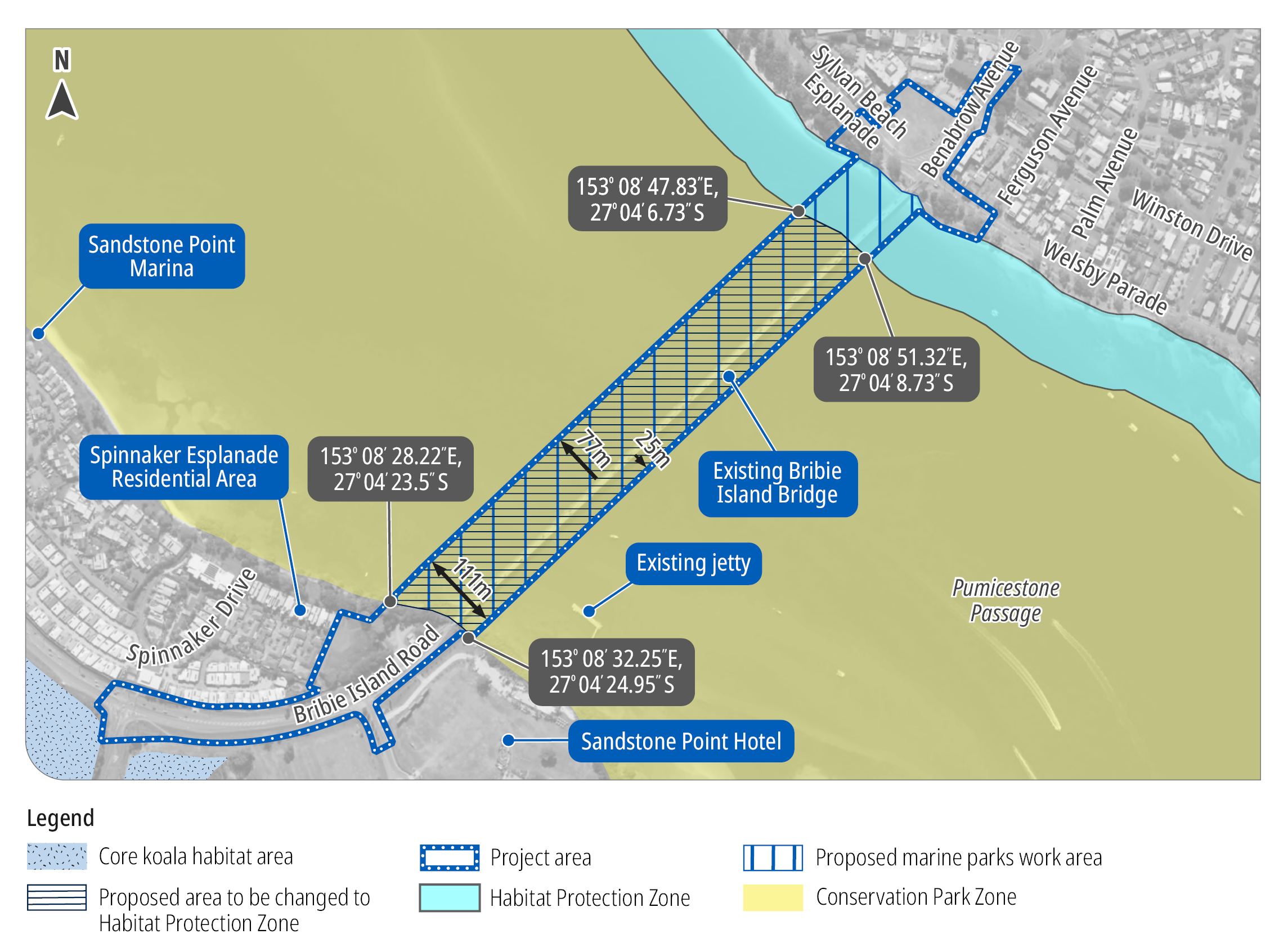
Proposed works
Proposed works within the Moreton Bay Marine Park include temporary and permanent piling, bridge construction and installation of associated drainage and utilities. The construction methodology will continue to be refined as the project progresses through design.
What feedback are we seeking?
Feedback is being sought on the proposed zoning amendment, the proposed works area, matters that should be considered during future assessment processes, and issues, opportunities or concerns associated with the proposal.
Environmental values
Pumicestone Passage and the Moreton Bay Marine Park support important environmental, recreational and cultural values. These include marine habitats, seagrass, fisheries values, water quality, marine fauna and opportunities for people to enjoy the coastal and marine environment.
Environmental investigations are helping inform the design, approvals and construction planning for the Bribie Island Bridge Upgrade. These investigations are considering environmental values within and around the proposed bridge corridor and works area.
The proposed rezoning area is in the southern part of Pumicestone Passage, near where it meets Moreton Bay. It includes tidal flats, mangroves along the mainland shoreline, a narrow sandy shoreline on Bribie Island, deeper tidal channels and patches of seagrass.
The area provides important habitat and is used for recreational and commercial boating, mooring, fishing, swimming and other public activities. Pumicestone Passage also has cultural significance for the Traditional Owners. TMR is consulting with the Kabi Kabi First Nation Traditional Owners as the project progresses.
Tides are the main influence on water movement, sediment, and water quality in the area. Local waves, freshwater flows, floods and storm tides also shape the coastline, while shallow groundwater supports nearby wetlands and waterways. Together, these environments provide connected habitat for plants and animals within Pumicestone Passage and the wider Moreton Bay Marine Park.
Potential impacts
Environmental investigations and assessments are being undertaken to identify potential benefits and impacts associated with the project and proposed Marine Park amendments.
Building the new Bribie Island Bridge may affect parts of Pumicestone Passage and the Moreton Bay Marine Park. Work necessary to build the new bridge will involve activities such as piling, excavation, boat movements and clearing vegetation, which may temporarily increase underwater noise, vibration and light, affect water quality, or increase the risk of spills and boats striking marine animals if appropriate controls and management measures are not adopted.
These impacts may temporarily disturb fish, other marine animals, migratory shorebirds and nearby habitats, including a small area of mangroves and soft sediment in the Moreton Bay Ramsar Wetland.
Planning has considered these potential impacts, and ongoing design development will continue to identify opportunities to further minimise any impacts. The works will avoid seagrass meadows and minimise the construction footprint wherever practicable. The proposed bridge pile layout has been designed to align with the existing bridge piles and the new bridge structure, reducing disturbance to the waterway and surrounding marine habitat. This will help maintain tidal flows, coastal processes and connections between habitats.
Construction may temporarily affect access to the area for nearby residents, businesses and visitors. There may also be temporary increases in noise, dust, traffic and boat activity, as well as changes to views across Pumicestone Passage.
TMR will continue working with the Kabi Kabi People and cultural heritage officers to assess and manage any potential impacts on cultural heritage.
Investigations are also considering potential effects on seagrass, fisheries values, marine fauna, coastal processes, recreation and marine users, and broader cultural and community values. The assessment of potential impacts and benefits will continue to be refined as investigations and design development progress.
Mitigation and management
The project will avoid environmental impacts where possible and minimise and manage impacts that cannot be avoided. Measures will continue to be refined through design development, environmental assessment and the State and Commonwealth approval processes.
A project-specific Environmental Management Plan will set out how environmental, community, and cultural values will be protected during construction. It will include measures to manage marine fauna, water quality, underwater noise and vibration, erosion and sediment, acid sulfate soils, waste, spills, dust, lighting and biosecurity.
Measures will include minimising the area and duration of disturbance, avoiding seagrass meadows, carrying out surveys before work starts, using trained marine fauna observers and establishing exclusion zones. Vessel movements will be managed to reduce the risk of striking marine animals. Lighting, noise and work times will also be managed to reduce disturbance to migratory shorebirds and other sensitive fauna.
Regular inspections and monitoring will be undertaken during construction, including monitoring of marine fauna, marine plants, water quality, underwater noise and vibration. Results, incidents and actions taken will be recorded and reviewed so work practices and management measures can be updated if unexpected impacts occur.
Temporary restrictions may be needed to create safe construction areas. These restrictions will be kept as small and short term as practicable. TMR and the construction contractor will provide early and regular updates to recreational and commercial boat operators, fishing groups, tourism businesses, paddlers and other marine park users. Updates will explain where and when restrictions apply, how long they are expected to last, alternative routes and safety requirements.
Information will be shared through advance notices, marine signs and other suitable channels. Where practicable, feedback from marine park users will help inform the timing of works and access arrangements. Restrictions will be reviewed and adjusted as work progresses.
Cultural heritage requirements will be developed and implemented in consultation with the Kabi Kabi People and cultural heritage officers. TMR will continue consulting with the community, stakeholders, and Kabi Kabi First Nation Traditional Owners as environmental assessments and approvals progress.
Together, these measures will help protect the environmental, cultural, recreational and economic values of Pumicestone Passage and the wider Moreton Bay Marine Park and support compliance with environmental approval conditions during construction and operation.


